

Projects delivered
Years senior experience
Strategic partners
Senior contact, no layers
Where do VOC emissions arise?
Raw materials and solvent handling
Learn more
Application, laminating and printing
Learn more
Ovens and heated process exhaust
Learn more
Equipment and line changeovers
Learn more
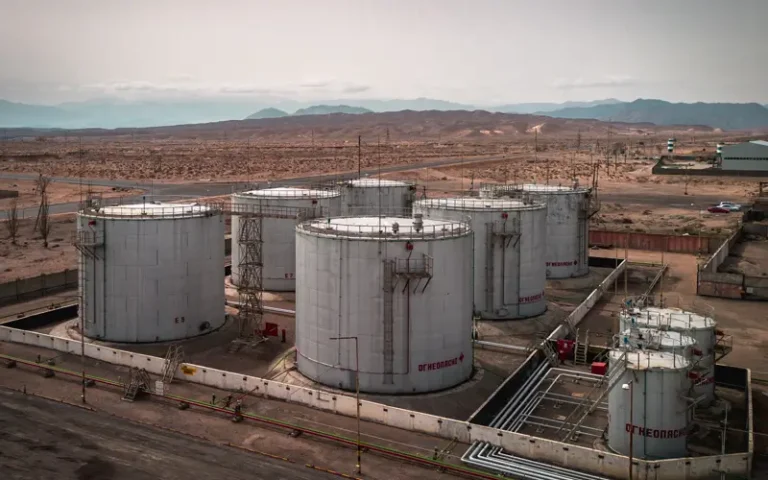
Tanks, loading and breathing losses
Learn more
Local extraction and room air
Learn more
01
Reduce risk
Emission, odour and operational risks
02
Use less energy
Heat integration and recovery potential
03
Stay compliant
Practical route toward permit requirements
04
Improve reliability
Designed around real variability
More than compliance
A solution should work for your plant, not only on paper.
VOC control affects product quality, safety, energy use and production continuity. We look at the complete process before recommending source reduction, solvent recovery or end-of-pipe treatment.
Technologies
No single technology fits every process.
The right technology depends on the emission profile. BM Process evaluates the full application and commercial trade-offs before anything is sized.

Consider first
Source reductionProcess changes, substitution, enclosure and improved capture reduce the load before treatment.

Recovery route
Solvent recoveryCondensation or adsorption may recover valuable solvent rather than destroy it.

Airflow reduction
ConcentrationRotor concentrators reduce the airflow requiring final treatment and can improve energy performance.

Destruction route
Thermal oxidationRTO and recuperative systems destroy VOCs with opportunities for internal and external heat recovery.

Destruction route
Catalytic oxidationLower operating temperatures can reduce fuel demand where the VOC stream is catalyst-compatible.

Alternative routes
Carbon, scrubber & bioAdsorption, scrubbing and biological routes provide alternatives for specific compounds and duties.
Final selection depends on VOC composition, concentration, airflow, temperature, variability, safety constraints and recovery potential.
One system view
Process, airflow, VOC profile, safety, energy and lifecycle cost — assessed together.
Process
Airflow
VOC profile
Safety
Energy
Lifecycle cost
The BM Process approach
From emission data to a robust solution. We translate plant conditions and regulatory requirements into a practical technology and implementation route.
01
Map sourcesIdentify emission points, operating modes and capture gaps.
02
Characterise VOCsComposition, concentration, airflow, temperature and variability.
03
Compare optionsPrevention, recovery, concentration and destruction routes.
04
Engineer safelyATEX, controls, heat balance, integration and maintainability.
05
Deliver & optimiseSupplier coordination, commissioning and performance support.

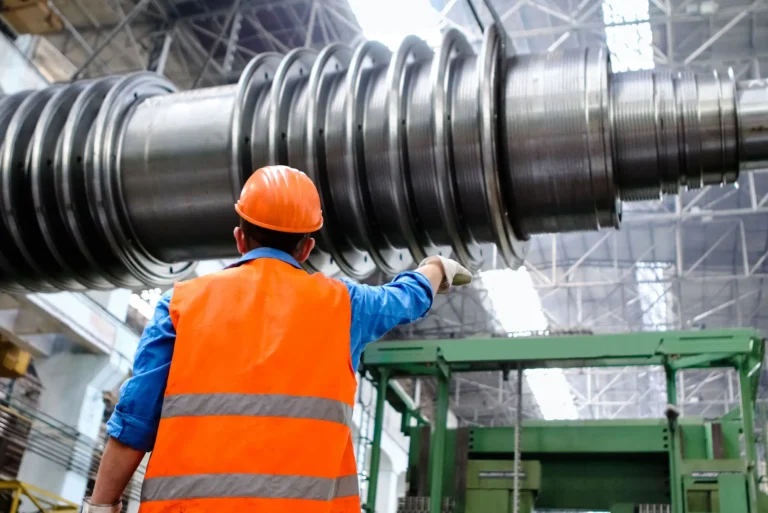



Project lifecycle
Independent engineering, practical delivery
One partner across the complete project lifecycle. BM Process connects process knowledge with proven emission-control technologies — helping you challenge assumptions, compare lifecycle costs and build a technically defensible investment case.
Engagements can start at any phase — not every assignment includes every stage.
Technology partner
Krantz Clean Air Solutions
BM Process supports Krantz thermal clean-air solutions in the Netherlands and Belgium, backed by extensive industrial engineering experience.
Engineering & local support by BM Process


ATEX & Safety
VOC control and explosion safety must be engineered together.
Safe operation requires control of VOC concentration together with suitable ventilation, ATEX zoning, ignition-source control, monitoring, interlocks and explosion-protection measures.
Kept below safe limits
Dilution and capture
Classified areas
Equipment selection
Detect and respond
Mitigation measures
FAQ
Questions we often discuss with plant teams
The first technical conversation can usually identify the most important data gaps and feasible pathways.
Share the application and your main concern — we’ll map the most useful next step together.
Which data is needed to select a VOC-control technology?
At minimum: airflow, VOC composition and concentration, temperature, moisture, particulates, operating hours and variability. Product, safety, energy and permit requirements are also important.
When is solvent recovery better than oxidation?
Recovery can be attractive when a solvent stream is sufficiently concentrated, consistent and reusable. The business case depends on separation quality, solvent value, energy demand and operational complexity.
Can heat from an oxidation system be reused?
Often yes. Depending on the VOC load and plant demand, recovered energy may support process air, hot water, thermal oil, steam or other consumers. This should be evaluated in the total heat balance.
Can BM Process improve an existing system?
Yes. We can review capture performance, energy use, reliability, process changes, control philosophy and technology limitations before recommending improvements.

Contact
Start with your process
Not sure which VOC solution fits? Share the application and your main concern. We’ll use the first discussion to understand the process, available data and the most useful next step.
Request a technical discussion
Response within one working day
Contact
Trusted by Industry Leaders